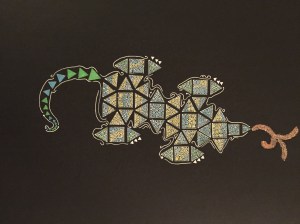
Quale Fetters and the Ten Insults

Part One: What Color is the Sky?

For those (like me) who are suspicious of AI, one of the principal arguments against it is that we cannot know if what we are calling (properly, are told by Big Tech to call) “artificial intelligence” is intelligence of any kind. The best definition I’ve encountered is that our current AI is a “statistical denoising algorithm.” Pose a question like “what color is the sky?” and the answer you receive is based on statistical likelihood:

Continue reading “Quale Fetters and the Ten Insults”
How Novel Does My Novel Need to Be?

Something that can bog down new writers – or prevent would-be new writers from ever setting pen to paper – is feeling like they’re expected to have “new” ideas, or it isn’t worth it. The fear of being called derivative or unoriginal is daunting. Let’s break down this insecurity in a few ways: theme, plot, setting, character, and style.

Continue reading “How Novel Does My Novel Need to Be?”

Five Creative Moods

Even if you don’t have a day job, a family, a social life, or other hobbies, there’s only so much time in the day for writing. If you want to finish your book, you must maximize that time. For me, the act of wringing maximum productivity out of myself is to gauge my mindset and do the thing most conducive to that mood. This isn’t to champion the idea of avoiding discipline – sometimes you must simply make yourself stick to priorities even if you don’t want to – but when I work intuitively like this, I usually feel like no matter what, I’m drawing nearer to my goal. It’s a way of continually “working” even when I’m too tired or distracted to do any “real” writing.

Continue reading “Five Creative Moods”

The Green Globe is a Chrysalis for the Lost City

If you’re confused by the title of this blog post, you’re in good company. I don’t understand it either. The meaning evaporated around 3 am on a random Tuesday, along with the dream that inspired it ….

I distinctly recall waking from an absorbing and cinematic dream in the middle of the night and dictating those words into a voice memo, confident that Future Me could unpack from them the freight necessary to write a new novel, as if the phrase were Mary Poppins’ handbag. (In my defense, this usually works.) When I played the words back the next morning, they meant nothing. Not a glimmer of recollection, and certainly not an epic blockbuster of a novel.

Continue reading “The Green Globe is a Chrysalis for the Lost City”

Stages of Writing a Novel

Notes

For me, the first stage of writing a novel is the notes. This is where I accumulate every possible idea for what could be in the book. It’s important not to limit yourself, to tell yourself you can only write down “good” ideas. First, you must get through quite a lot of “bad” ideas before you get to the “good” ones.

And second – the reason I keep using quotation marks – is that ideas are only good or bad in context. If you’re writing a grimdark war novel filled with violence and nihilism, a romantic subplot filled with all the loving and tender dialogue you spent hours drafting might be a “bad” idea. But that doesn’t mean your work is wasted. When you get to the point of carving out ideas that don’t fit in the book, you don’t need to delete them – you can put them in a separate file to maybe use later. More on that in a minute.

Continue reading “Stages of Writing a Novel”

Painting a Novel

There is a lot of advice out there geared toward writers, but I find it more helpful to think of the process the way a Renaissance painter might approach a new painting.

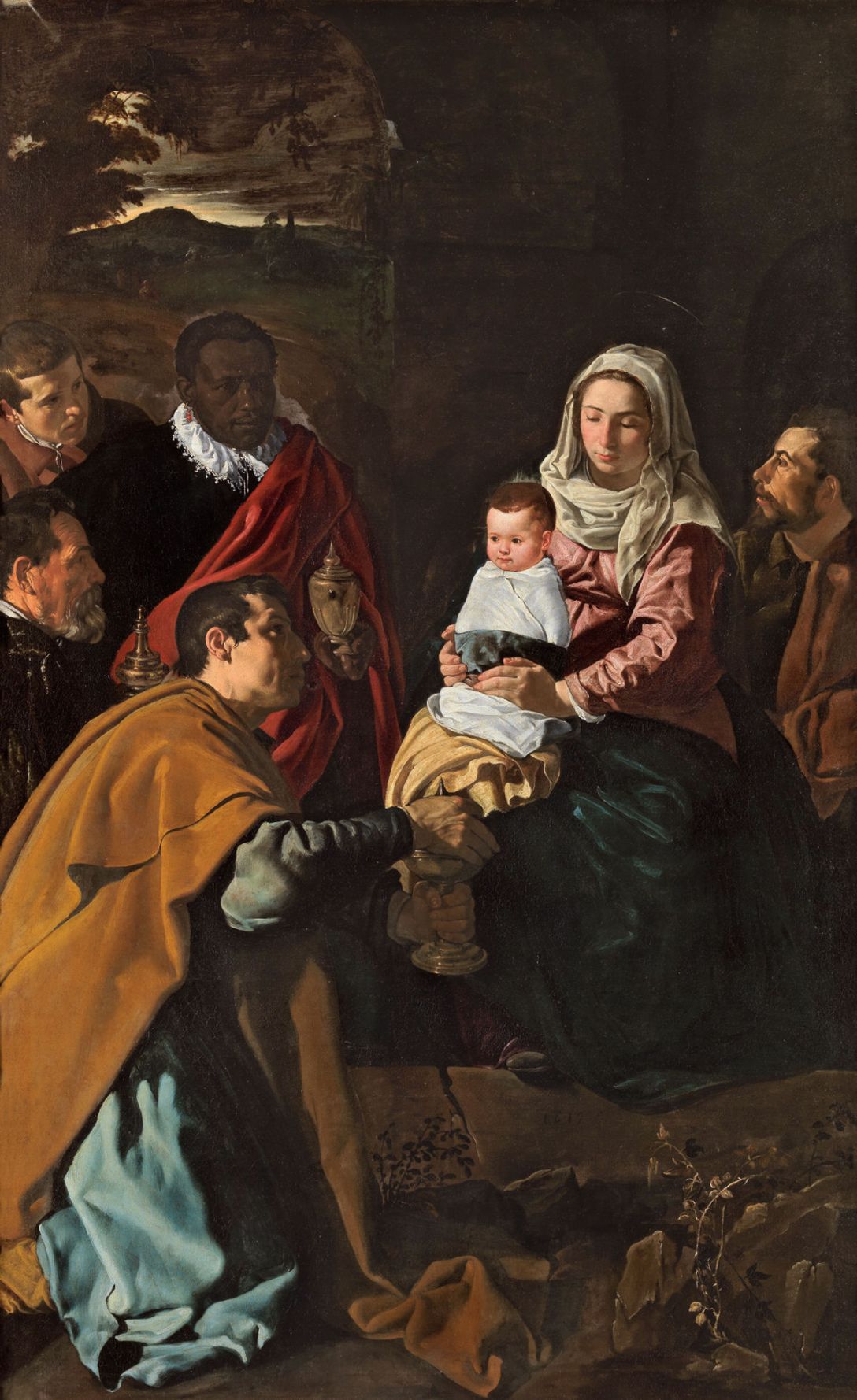
First, a theme, the more specific the better. “Motherly love” is nice but vague. “The wistful feelings of a mother gazing at her child knowing that child will grow beyond her reach and will suffer in ways she cannot prevent” is more specific and, by the narrowness of its scope, makes it easier for us and our audience to gauge our success. Limitations are freeing; by defining a narrow scope of theme, we automatically rule out a vast amount of material that doesn’t belong in our composition, and now we can focus on the few things that really matter. In this case, the expression on the mother’s face, the tilt of her head, the set of her mouth, and especially her eyes.

Continue reading “Painting a Novel”

A Definition of “Writing”

It’s easy to get bogged down and discouraged by the feeling that you’re not really “writing,” especially if what you’re doing doesn’t involve long hours typing on a keyboard. So, let’s talk about what we mean when we say that word.

To me, “writing” is an umbrella term covering numerous activities that all get me closer to publication. Some of these activities are more directly focused on that goal, but all are equally productive. So, from least to most tangible:

Continue reading “A Definition of “Writing””

Out of Season

Walking home on this post-Christmas pre-New Year’s December day, I saw:

in the bare branches of a shrub –  a tiny scarecrow made of twine and fabric on a slender wooden stick, something you might use as a whimsical accent in a fall container garden

crushed in the road – a neon purple plastic spider ring like children buy for a quarter from the toy vending machines in the department store lobby around Halloween

Why did these creatures choose this day of all days to come creeping out of whatever under-baseboard secret kingdom obsolete holiday decorations dwell in? Perhaps some myopic felt Easter bunny stuck its head out of a hidden burrow, mistook the glitter of Christmas lights for the twinkling of stars, and sounded the all-clear – “Christmas is over! Come out! Come out!”

I felt sorry for the poor things, the way I feel when I see the crocuses pushing up their heads during those rare warm spells in February. “Shhhh, go back to sleep. Winter isn’t over yet.”

The Dragon of Iletupa

Is it wrong to start designing the cover art before you write the book? I hope not. These are pen-and-ink studies for the cover art of The Dragon of Iletupa, the next novel I’m working on. The first one began as studies of dragon scales and then turned into an odd little street scene with characters taking their colorful balloons for a walk. This in turn inspired a limerick entitled ‘The Droll Encounter.’

The other two managed to come out looking like dragons. Progress!

While taking his balloons for a stroll / Professor Lanyard encountered a troll / A White-Crested Rail and a belligerent snail / Under circumstances unusually droll.
cover art study 2
cover art study 3

The Butcher’s Bill, Installment One

One of the principal joys of being an author is killing your characters in imaginative ways. Don’t believe me? Try it.

For your amusement (and my own) I have assembled a table of the various gruesome ways characters have met their deaths in the work I have published so far. I’ll build new tables as I work on other projects, and publish them here from time to time, perhaps with a running total.

You will notice Perilous Jack’s name many times. The Perilous Adventures of Jack the Dragonslayer are Choose Your Own Adventure®-style stories, in which there are numerous ways for him to meet a bitter ending. Since all the action is directed by the reader, the squeamish or guilt-prone are advised to proceed with caution!

Enjoy!

Continue reading “The Butcher’s Bill, Installment One”