Something that can bog down new writers – or prevent would-be new writers from ever setting pen to paper – is feeling like they’re expected to have “new” ideas, or it isn’t worth it. The fear of being called derivative or unoriginal is daunting. Let’s break down this insecurity in a few ways: theme, plot, setting, character, and style.
What Does “New” Mean Anyway?
Humans have been writing, singing, dancing, painting, sculpting, and acting for a little while now. Cave paintings – arguably the first form of human storytelling – date back almost 36,000 years. In that time, every imaginable theme has been explored and re-explored in the light of advances in society and technology. To shoulder the burden of creating something truly “new” is an unfair expectation at best.
While you may not be able to invent an entirely new theme, you needn’t be discouraged – what makes existing themes so powerful is their familiarity and relatability. The simple fact that nearly everyone has been hurt by a romantic partner at some point makes the theme of “jilted lover” widely accessible and almost universally relatable. The work here is not creating a new theme, but finding your unique voice to express one of the universal themes that your audience can relate to.
When you find yourself drawn to a theme, explore what others have done with it. This will help you find your own voice. For example, “ordinary people who want the freedom to express themselves while laboring under an authoritarian regime.” Works as diverse as Star Wars, The Hunger Games, and The Handmaid’s Tale all explore that theme in very different ways. The world may not need another Star Wars, but that shouldn’t stop you from writing in your chosen theme.
There are iconic plots, as well. The classic Hero’s Journey as outlined by Joseph Campbell in The Hero with a Thousand Faces has been explored in countless works of fiction including Star Wars: A New Hope, The Wizard of Oz, and The Hobbit. This format is enduring because it is familiar.
There are even examples of creators using almost identical plots and being wildly successful. Take this analysis of Star Wars: A New Hope and Harry Potter and the Philosopher’s Stone by Stephen Fry:
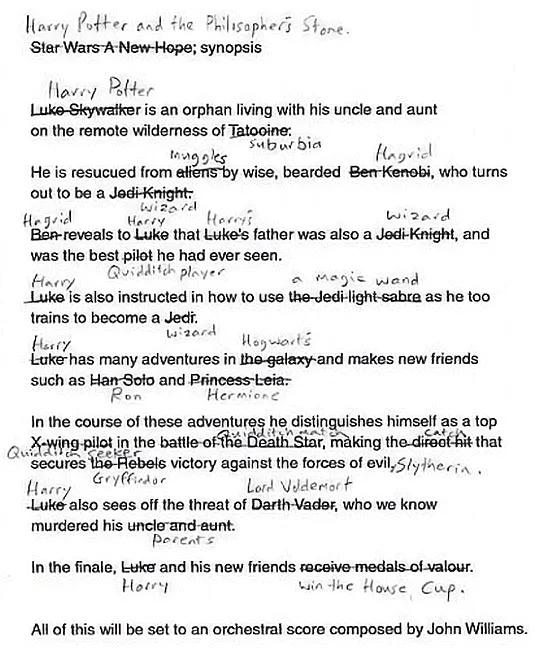
Same story, different clothes. And check out Ran, written and directed by Akira Kurosawa. It’s a samurai action epic retelling William Shakespeare’s King Lear. Some stories are so powerful and so enduring, the audience will not only not mind seeing them remixed – they will avidly seek out such remixes.
While this approach has been parodied (see https://tvtropes.org/pmwiki/pmwiki.php/Main/RecycledWithAGimmick and https://tvtropes.org/pmwiki/pmwiki.php/Main/DieHardOnAnX among others), there is no denying the appeal of a familiar idea, setting, character, plot, or theme taking place under novel circumstances. When I first picked up Gideon the Ninth by Tamsyn Muir, what enticed me to open the cover and start reading was a blurb on the front: “Lesbian necromancers explore a haunted gothic palace in space!” That’s all it took; I’m three books in and hooked.
What’s the Worst That Can Happen?
Assuming you’re not actually plagiarizing another creator or using their intellectual property without their permission, what are the consequences of having your style called derivative? An online troll accuses you of trying to be the next J.R.R. Tolkien? That sounds like … a compliment? Being compared to the enduring greats is hardly undesirable.
And consider: remember the last time you read a book or watched a film, and as the final chapter played out before your eyes and you closed the book or watched the credits roll, you felt a sense of melancholy at knowing that the story was over. Yes, you can read it or watch it again – but you’ll never again experience it for the first time. Remember the last time you realized that a creator you admire is dead and will never be able to write that sequel you wish you could read. Remember the last time you enjoyed a work and left it hungry for more.
Think you’re alone? Everyone feels this. That’s why sequels are a thing – for every person who shrugged at Star Wars: A New Hope and said, “meh, I don’t get it”, there are a hundred more who left the theater yearning to climb back into that exciting new world and keep exploring. If you’re one of them, you can give yourself and other fans the gift of something “derivative.” If you’re one of the fans who went through the five stages of grief when Firefly was canceled, your western space opera might be just the thing to heal that psychological wound – for you and for others.
Chase novelty if you must, but respect too that there are countless fans out there yearning for the familiar (you’re probably one of them, whether you know it or not) and that exploring the iconic themes, plots, settings, and characters puts you on the same footing as the greats. If you can find your own voice and make the familiar feel new again, you will find your fanbase.

 Chronicler's Note: